How Water Tank Monitoring Could Improve Village Water Resilience
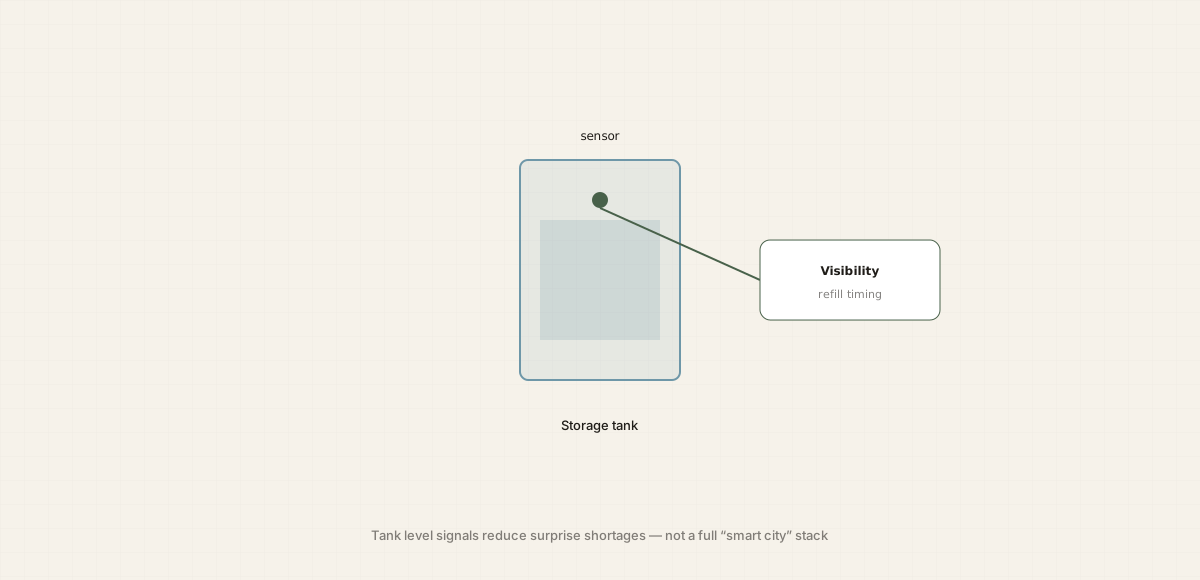
Tank sensors and simple alerts are not a smart-city platform—they are a visibility layer that can move village water from late reaction to earlier preparation, better refill timing, and less avoidable stress.
In many communities, water systems are managed through experience, routine, and reaction.
People know when a tank usually runs low. They know when a refill truck is likely to come. They know who to ask, who to call, and when shortages tend to happen.
But one of the biggest problems with that kind of system is that it often works just late enough to create stress.
A tank gets checked after it is already too low. A refill is organized only when the shortage becomes visible. Transport gets delayed. A village starts adjusting around uncertainty instead of planning around visibility.
That is why a simple question matters so much:
What would change if communities and operators could see water levels earlier, more clearly, and more consistently?
This is where basic water tank monitoring starts to become useful.
Not as a complicated “smart city” system. Not as a heavy dashboard-first platform. But as a simple support layer around a very practical problem.
The operational problem
Water shortages do not always happen because there is no water source at all.
Sometimes they happen because:
- nobody realized the tank level had dropped so far
- refill planning started too late
- transport was not lined up in time
- usage rose faster than expected
- maintenance issues were only noticed after service was already affected
In other words, the problem is often not just water supply. It is water visibility.
And when visibility is weak, everything becomes more reactive.
This affects:
- refill timing
- household planning
- livestock access
- transport coordination
- local confidence in the system
- the amount of stress placed on alternative sources
So one of the most useful things a monitoring system can do is very simple:
make water status easier to know before it becomes a problem
Why manual checking is often not enough
Manual checking is not useless. In many places, it is the only practical way water systems are monitored at all.
But it has limits.
Someone has to:
- remember to check
- be available to check
- interpret what “low” means in context
- pass the message on
- make sure someone acts on it
That works to a point. But it is easy for delays to creep in.
A system like this may depend too much on:
- one person noticing in time
- local routines staying consistent
- good communication every time
- no breakdown in transport or coordination
As soon as one part slips, the whole chain becomes weaker.
That is why even a very simple sensor system can be helpful. It does not replace local knowledge — it reduces the burden of always having to rely on memory and timing alone.
What a lightweight monitoring system could look like
A practical village water monitoring model does not need to start with a big platform.
A simple version might include:
- a tank level sensor
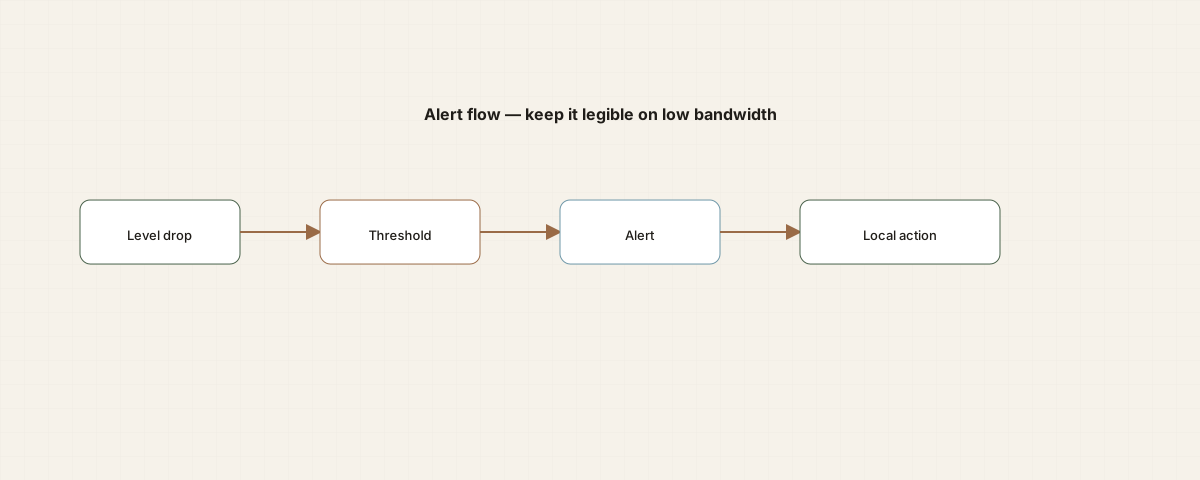
- a basic threshold for low-water alerts
- periodic readings sent through a lightweight device
- a message sent to the relevant person or group when levels drop
- optional summaries showing usage over time
That is enough to do something valuable:
- signal low levels earlier
- give more time to organize refills
- reduce uncertainty
- create a record of what is happening over time
And that time matters.
Because in many real systems, the difference between smooth operation and disruption is not weeks. It is whether someone gets a useful signal early enough to act.
Low-level alerts are simple, but powerful
One of the most useful features in this kind of setup is the simplest one: the low-level alert.
Imagine a tank reaches a point where, under normal conditions, action should begin.
Instead of waiting for someone to notice manually, the system sends:
- an SMS
- a WhatsApp-compatible alert if suitable
- a message to a local operator
- a signal to a partner organization
- or an entry into a simple operations view
That changes the rhythm of the system.
Instead of: the tank is low, now we react
it becomes: the tank is approaching a risky level, now we prepare
That shift from reaction to preparation is one of the strongest arguments for basic monitoring.
It can improve:
- refill coordination
- transport planning
- communication with communities
- response time
- overall confidence in the service
Water data can reveal more than just low levels
Once monitoring exists, even in a simple form, it can start to show patterns that are hard to see otherwise.
For example:
- how quickly tanks are used in different periods
- whether demand changes seasonally
- whether refill frequency is improving or worsening
- whether one site is under unusual pressure
- whether low-level events happen regularly at similar times
This matters because over time, water monitoring becomes useful not only for real-time alerts, but also for better planning.
Instead of only asking: Is the tank low right now?
you can start asking:
- How often does this happen?
- Is usage changing?
- Which sites are under more pressure?
- Are refills happening efficiently?
- Which communities may need better storage planning?
That is where a simple monitoring system begins to become an operational tool, not just a sensor.
Why this matters for resilience
Water resilience is not only about infrastructure. It is also about predictability.
If a system is unpredictable, communities spend more energy adapting around uncertainty.
That can mean:
- changing routines at short notice
- making unnecessary trips
- relying on less reliable alternative sources
- increased stress during already difficult periods
- more pressure on nearby water points
A more visible system is often a more stable system.
That does not mean sensors solve water scarcity. They do not.
But they can help reduce avoidable uncertainty, which is a real and meaningful part of resilience.
In some cases, that may be the difference between:
- a shortage that catches everyone off guard and
- a shortage that is seen early enough to manage
That difference matters.
The operational value is often bigger than the technical complexity
This is important because people sometimes assume technology only adds value when it is advanced.
But with water tank monitoring, the useful part is often not technical sophistication. It is the operational improvement that comes from very simple visibility.
Even a basic setup can support:
- refill readiness
- scheduling
- communication
- prioritization
- accountability
- review of recurring issues
That is why this kind of system is attractive. It can stay lightweight while still changing how the service is managed.
This could also support maintenance awareness
Another useful extension is maintenance visibility.
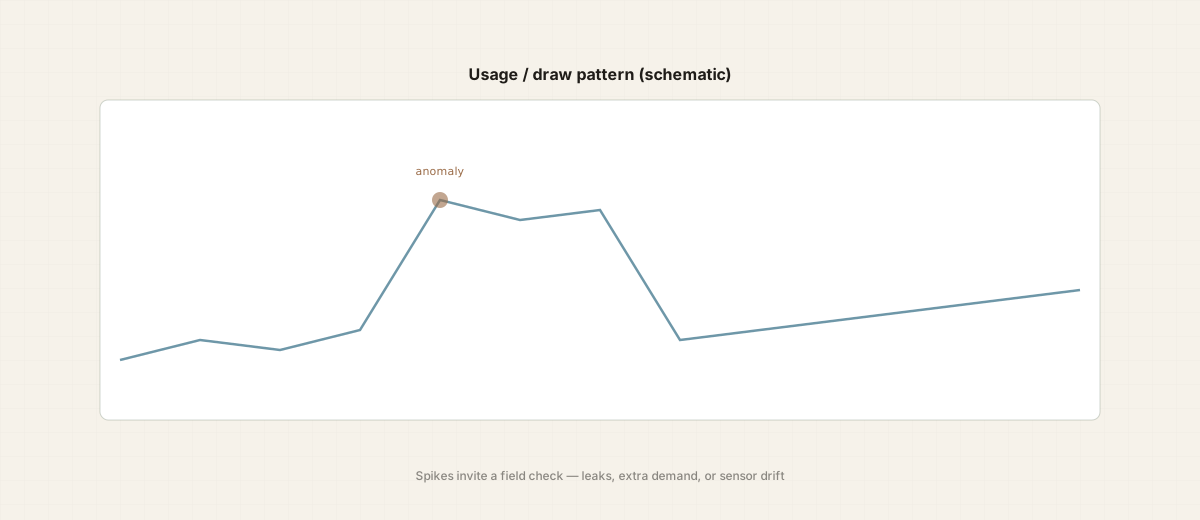
Sometimes a tank issue is not only about consumption. It may be:
- a leak
- abnormal usage
- a sensor reading that suggests something unusual
- a refill event that did not raise the level as expected
When data is observed over time, those patterns can become easier to notice.
That means monitoring can gradually support not only water delivery, but also:
- infrastructure maintenance
- anomaly detection
- local investigation
- better understanding of system weak points
You do not need advanced AI to begin with. Even a simple pattern of readings can help raise better questions.
What this could look like as a pilot
A realistic pilot could stay very small.
For example:
- one village or a small number of water tanks
- simple water level sensors
- a clear low-level threshold
- SMS alerts to the relevant local contact or operator
- a lightweight dashboard or weekly report
- a short review period to compare how the system performs before and after monitoring
The point would not be to build a massive water platform from day one.
The point would be to test:
- whether earlier visibility improves refill timing
- whether alerts reduce water stress events
- whether usage patterns become clearer
- whether communities and operators actually find the system useful
- what level of technical complexity is truly necessary
That is the kind of pilot question worth asking.
Where this could go next
If the basic model proved useful, there are several practical directions it could grow into over time:
- refill scheduling support
- route planning for refill teams
- seasonal water demand analysis
- tank performance comparisons across villages
- maintenance alerting
- simple village water status dashboards
- integration with other environmental monitoring systems
It could also become part of a broader resilience layer that links:
- water access
- land pressure
- village planning
- restoration decisions
For example, water data may help explain why certain surrounding areas are under more movement pressure, or why demand changes seasonally in ways that matter for wider landscape planning.
What this does not solve on its own
It is important to be clear about this too.
Tank monitoring does not create water where there is none. It does not fix weak transport systems by itself. It does not replace maintenance teams. It does not solve deeper infrastructure gaps on its own.
What it can do is improve visibility.
And sometimes visibility is the missing piece that helps everything else work a little better:
- earlier preparation
- better timing
- fewer surprises
- more confidence
- better records for future planning
That is a meaningful contribution.
Why this matters in Somalia
In Somalia and similar dryland settings, water systems are often under pressure from both environmental conditions and operational uncertainty.
That means a monitoring layer could be useful not because it is flashy, but because it supports a very practical need: knowing earlier what is happening and acting sooner
A lightweight model built around:
- simple sensing
- basic thresholds
- alerts
- local communication
- review over time
may be much more useful than a heavy, centralized system that is difficult to maintain.
And because water sits at the center of so many other systems — movement, daily life, livestock, local resilience — improving water visibility can have wider benefits than it first appears.
Why this matters for Abuur Labs
At Abuur Labs, we are interested in this kind of problem because it sits at the intersection of:
- infrastructure
- local resilience
- field monitoring
- practical operations
- simple but useful technology
It is exactly the kind of pairing that makes sense to explore:
- real need first
- lightweight technology second
- practical pilot before complexity
- learning built into the process
Because if a small system can reduce uncertainty around water, that is already valuable.
And if it also creates better operational understanding over time, that becomes even more useful.
A better way to think about water monitoring
So how should we think about water tank monitoring?
Not as a “smart water” project in the abstract.
But as a practical support layer that helps communities and operators move from: late reaction toward earlier awareness and better preparation
That is often where resilience begins.
Key takeaway
Water tank monitoring will not solve every water challenge on its own, but it can provide an early visibility layer that helps communities and operators prepare sooner, plan better, and manage village water systems with less uncertainty.