How Satellite Imagery and Drones Could Improve Restoration Site Planning
Satellites and drones are not the story—better terrain reading is. Imagery and elevation data help narrow where to work, place swales and recovery zones with runoff logic, and make field visits more focused before labor and budget commit.
One of the easiest ways for restoration work to go wrong is to act too quickly on a landscape that has not been read properly.
A place looks dry. There is obvious pressure on the land. People want to help. An intervention is chosen.
But then the difficult questions show up:
- Is this actually the right part of the landscape to intervene in?
- How does water move here?
- Where is runoff concentrating?
- Where would a swale or trench help, and where could it actually make things worse?
- Which areas are worth protecting first?
- Where does vegetation still show signs of recovery?
- Where is the land under the most pressure?
Those questions matter because restoration is not just about good intentions. It is about placing the right intervention in the right part of the landscape.
That is where satellite imagery and drones start to become useful.
Not as a replacement for field knowledge. Not as a magic planning system. But as a way to see the land more clearly before making decisions.
The planning problem
A lot of restoration planning begins too generally.
People know they want to:
- improve water retention
- reduce land degradation
- support vegetation recovery
- create swales or trenches
- identify suitable areas for planting
- protect certain zones
But if the planning stays too broad, the intervention risks becoming generic.
And generic planning can lead to:
- structures placed in the wrong position
- water-harvesting features that do not match the terrain
- effort spent in low-priority zones
- poor assumptions about where the land is most recoverable
- a lot of work with limited long-term impact
This is why site planning matters so much.
Before deciding what to do, it helps to understand:
- elevation
- slope
- runoff direction
- water concentration points
- land cover
- visible erosion patterns
- access
- existing use pressure
That kind of reading is hard to do well from ground level alone, especially across large or uneven areas.
Why terrain information matters
When people talk about restoration, they often focus on visible surface actions: planting, digging, fencing, seeding.
But underneath all of that is the actual structure of the land.
The land has shape. It has slope. It has channels, ridges, basins, and subtle movement patterns. And water responds to all of those things.
That means the success of many restoration methods depends heavily on terrain.
For example:
- a swale only works properly if placed in the right relationship to slope and runoff
- a pond or water-harvesting feature depends on the shape of the land around it
- a recovery zone may make more sense in one part of the site than another
- a degraded patch may actually be a symptom of water movement upstream
- a seemingly flat area may still have subtle drainage logic that matters
So the planning question becomes: Can we understand the landscape well enough to place the intervention where it has the best chance of helping?
That is where elevation and imagery start to matter.
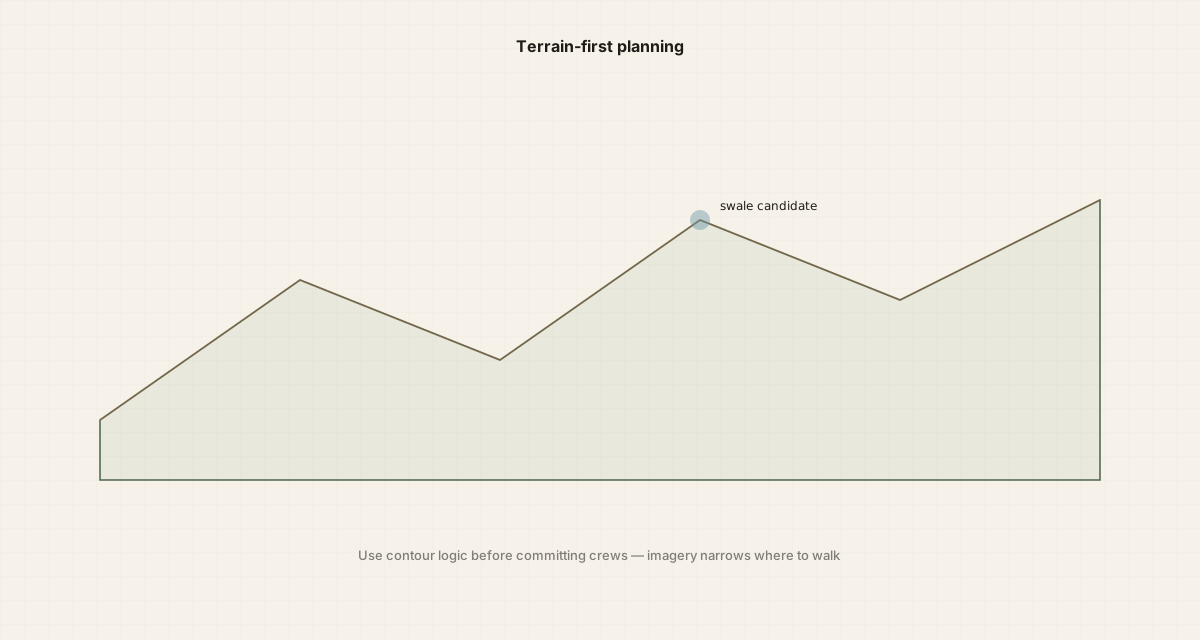
What satellite imagery can help with
Satellite imagery is useful because it gives a broader view of the landscape before you are standing in it.
Depending on the source and quality, it can help with:
- seeing land cover patterns
- identifying bare and vegetated areas
- understanding general terrain structure
- spotting water pathways or seasonal drainage features
- comparing different parts of a wider landscape
- prioritizing which sites are worth visiting first
It can also help answer a practical planning question: Where should attention go first?
That matters a lot when the possible area is large and field capacity is limited.
Instead of going everywhere with the same level of effort, imagery can help you narrow down:
- sites with stronger recovery potential
- areas showing severe land pressure
- locations where water movement is shaping the problem
- places where interventions may be more feasible
- villages or zones worth deeper analysis
Satellite imagery will not tell you everything. But it is often a strong first filter.
Why elevation and slope are especially important
Images alone are useful, but the planning becomes much more powerful when you add elevation and slope information.
That helps answer things like:
- which way water is likely to move
- where runoff may be accelerating
- where it may slow or spread
- which areas are more suitable for contour-based work
- where a trench, bund, or swale might make sense
- where water storage features might be possible
- which zones are more exposed to erosion
This is especially relevant if you are thinking about methods linked to permaculture or landscape design, such as:
- swales
- contour earthworks
- keyline-inspired planning
- infiltration-focused interventions
- small ponds or water collection features
- restoration corridors aligned with terrain logic
Without terrain information, those interventions can easily become guesswork.
With terrain information, the discussion becomes more grounded.
Where drones add another layer
Satellite imagery is useful for broad planning, but drones can add much more local detail.
That is important because once a site has been prioritized, the next challenge is often: How do we understand this place well enough to design more precisely?
Drones can help by:
- capturing more detailed imagery
- providing a closer look at micro-topography
- showing erosion features more clearly
- helping identify access routes and practical constraints
- creating local visual baselines before work begins
- helping map smaller or more complex sites
This is especially useful when a landscape looks fairly uniform from afar, but behaves very differently once you inspect it more closely.
A drone survey can help move planning from:
- general idea to
- site-specific design thinking
And that step matters a lot.
This is where restoration planning becomes more factual
One of the strongest things about imagery and terrain analysis is that it shifts the conversation.
Instead of saying:
- “This looks like a place where we should do something” you can begin to say:
- “Water seems to be moving this way”
- “This zone appears to carry more pressure”
- “This slope is better suited to this type of intervention”
- “This area may be more useful as a recovery zone than a planting zone”
- “This basin may be worth assessing for storage or infiltration support”
That does not eliminate judgment. But it improves the quality of judgment.
And that is often the real value of planning tools: they help make decisions more informed before labor and resources are committed.
What this could support in practice
A planning approach like this could support decisions around:
- where to start restoration work
- where to place swales or contour-based features
- which areas should be protected for recovery
- where ponds or water-holding structures might be assessed
- where planting would be more likely to succeed
- where the land is too pressured to respond without bigger changes
- which villages or zones deserve deeper study first
This is especially useful for early-stage programs, where the biggest challenge is often not lack of ideas, but lack of clarity about where those ideas actually fit.
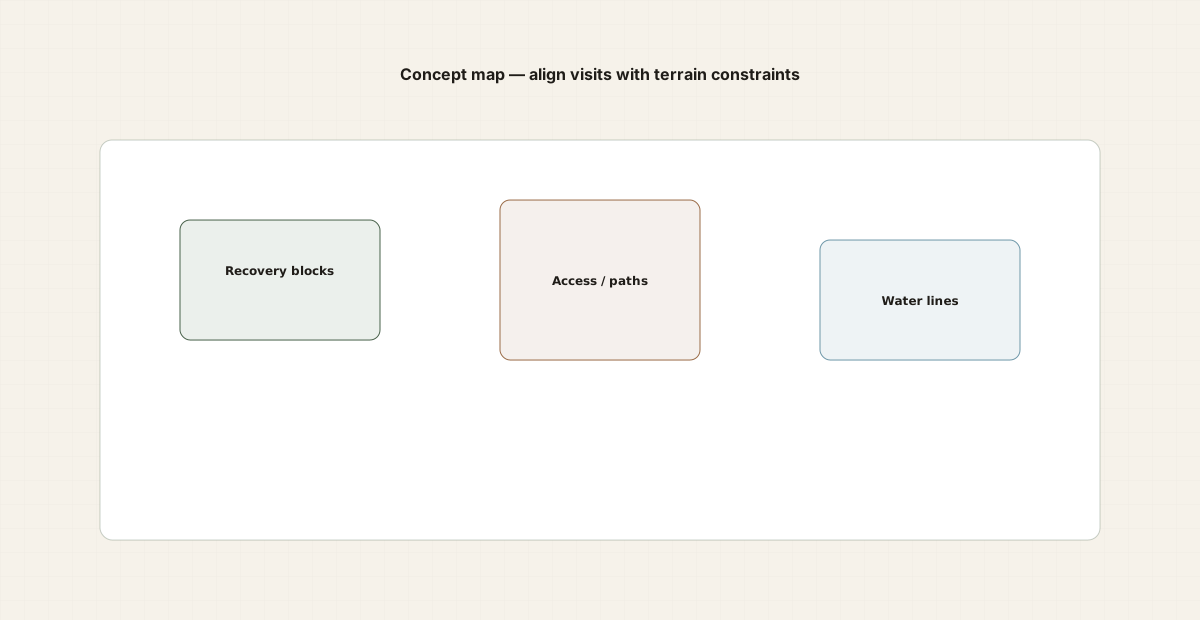
Why this matters for permaculture-style interventions
If you are thinking in terms of:
- swales
- keyline-inspired water movement
- infiltration systems
- contour shaping
- vegetation patterns that support moisture
- linked landscape interventions
then you are already dealing with terrain whether you explicitly acknowledge it or not.
That means factual land reading is not a luxury. It is part of the design process.
You do not need to force a permaculture label onto every site. But if the aim is to work with water, slope, and recovery logic, then elevation and mapping tools become especially useful.
They can help move the conversation from: interesting concept to specific intervention logic
And that is where planning becomes much more serious.
This does not replace field visits
This is important to say clearly.
No map, satellite layer, or drone image replaces standing on the land, observing conditions directly, and understanding local use.
There are things imagery may miss or misread:
- actual soil condition
- subtle barriers to implementation
- local movement patterns
- seasonal realities
- social constraints
- whether a place that looks suitable is actually practical
So the value of mapping is not that it replaces fieldwork. It helps make fieldwork more focused, more informed, and more efficient.
A good planning process might look like:
- use satellite and elevation data to narrow attention
- use drones to understand a smaller priority site in more detail
- visit the land directly
- compare map logic with field reality
- shape the intervention from both perspectives
That is much stronger than guessing from one angle alone.
What this could look like as a pilot
A small pilot here could be very practical.
For example:
- choose one village or one candidate restoration area
- review satellite imagery and elevation data
- create a basic terrain and runoff interpretation
- identify likely zones for swales, recovery, planting, or water features
- use a drone to map the most relevant section in more detail
- produce a short restoration site profile
- compare the planning assumptions with what is found on the ground
That kind of pilot would not be trying to solve the whole landscape immediately.
It would be testing whether this approach improves:
- planning clarity
- intervention placement
- partner confidence
- quality of early restoration design
That is a strong use of technology.
Where this could go next
If this approach proved useful, it could lead toward:
- village restoration profiles
- restoration opportunity maps
- baseline site reports for NGOs and partners
- prioritization models across multiple sites
- restoration suitability scoring
- repeat drone surveys for monitoring after implementation
- stronger design support for water-harvesting and recovery work
It could also feed directly into other systems, such as:
- grazing zone planning
- nursery placement
- water monitoring priorities
- drone seeding strategies
- future field operations
That is where the value begins to compound.
Why this matters in Somalia
In Somalia, this kind of planning support could be especially useful because dryland restoration often depends on getting a few decisions right very early:
- where pressure is strongest
- where recovery is still possible
- where water can be retained more effectively
- where the terrain supports intervention
- where effort should be focused first
Because resources are limited, planning quality matters.
Better land reading can help reduce wasted effort and make restoration work feel less generic and more grounded in actual landscape conditions.
That is important if the goal is to build practical, credible, and scalable restoration models.
Why this matters for Abuur Labs
At Abuur Labs, this is one of the clearest ways we think technology can support restoration without becoming the center of the story.
The real problem is not “lack of drones.” The real problem is that restoration planning is often too general for the land it is trying to help.
Satellite imagery, elevation data, and drones can help make the planning process more factual, more visual, and more specific.
That is valuable because better planning is one of the strongest ways to improve what happens later on the ground.
A better way to think about imagery and drones
So how should we think about these tools?
Not as impressive hardware. Not as a shortcut around local knowledge. And not as a substitute for fieldwork.
But as practical ways to read the land more clearly before deciding where and how to act.
That is where they become useful.
Key takeaway
Satellite imagery and drones can help make restoration planning more factual by improving how we read terrain, elevation, runoff, and land condition before deciding where swales, recovery zones, planting, or water-harvesting interventions are most likely to make sense.