How GPS, Geofencing, and Simple Alerts Could Support Managed Grazing
A practical look at representative GPS tracking, geofencing, and lightweight alerts as a support layer for pasture recovery in drylands—not a replacement for local agreements, but a way to make movement and recovery zones more visible over time.
One of the hardest parts of pasture recovery is not convincing people that overgrazing is a problem.
In many dryland communities, people already know when land is under pressure. They can see when grass does not come back properly. They can feel when animals have to move further. They know when some areas are carrying too much pressure and not getting enough recovery time.
The harder question is this:
How do you actually support better grazing patterns across a large, open landscape without creating a heavy system that nobody can maintain?
That is where simple technology starts to become interesting.
Not as the main answer. Not as a replacement for local agreements. But as a support layer.
Because if a community wants to try managed grazing, recovery zones, or rotational use in a more deliberate way, one of the biggest challenges is simply knowing what is happening in practice.
The ecological problem
Pasture recovery depends on something simple but difficult: giving land enough time to recover.
In dryland regions, that recovery can already be fragile. Rainfall is uneven. Vegetation can come back slowly. Pressure from animals may return before the land is ready. And once the same areas are used too often, recovery becomes weaker and weaker.
So even if people agree in principle that certain zones should rest, real life gets messy.
Animals move. People take practical routes. Rainfall changes decisions. Pressure shifts around water points. Memory and manual coordination only go so far.
That means many grazing systems become reactive rather than planned. The result is often:
- repeated pressure on the same areas
- weak vegetation recovery
- poorer pasture quality over time
- less resilience during dry periods
- more stress on nearby zones as well
So the real challenge is not only ecological. It is also operational.
Why managed grazing is difficult in practice
A lot of managed grazing ideas sound reasonable on paper.
Create zones. Let one area recover. Move animals elsewhere. Return later when conditions improve.
The problem is that dryland landscapes are not neat fenced diagrams.
They are open, lived-in systems shaped by:
- distance
- water access
- seasonal movement
- local agreements
- herd behavior
- practical day-to-day decisions
So even if a village or group of herders wants to protect certain areas, it can still be difficult to answer questions like:
- Which areas are actually being used most?
- Are recovery zones being entered earlier than expected?
- Are movement patterns changing over time?
- Which parts of the system are under the most pressure?
This is where simple digital tools could help — not to “control” the system from outside, but to make it more visible.
A practical way technology could fit
One useful idea is not to track every animal.
That would usually be too expensive, too complicated, and not necessary.
Instead, a more practical model could be:
- track one or a few representative animals from a herd
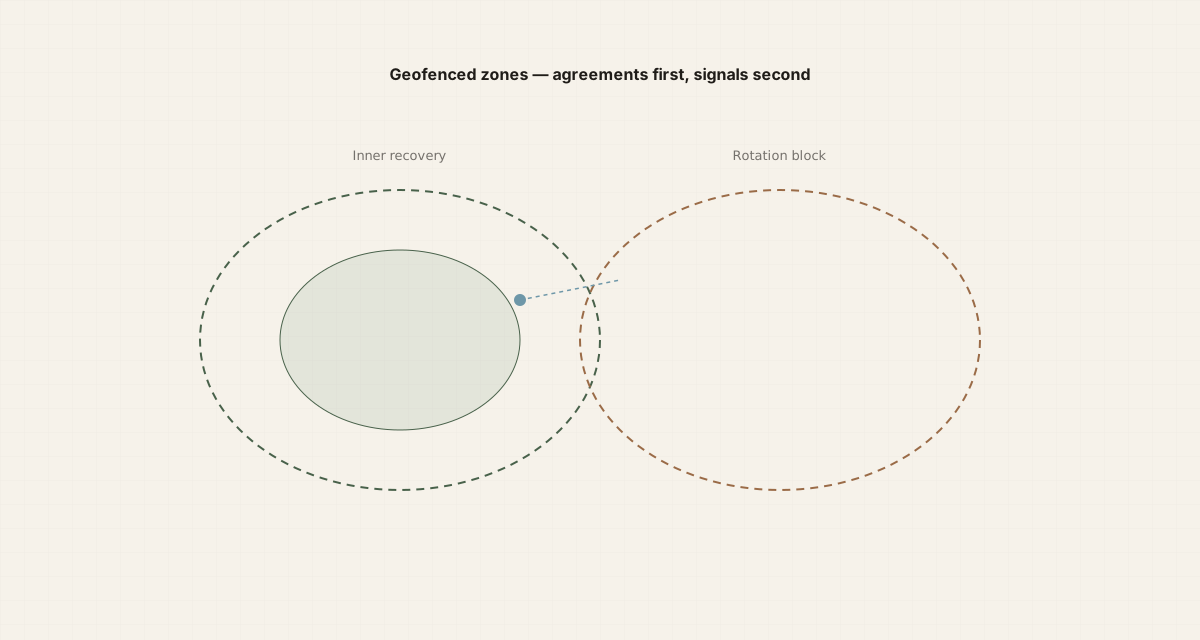
- define rough recovery zones and active grazing zones
- use GPS location data to understand movement patterns
- set up simple geofencing around areas meant to rest
- send alerts when tracked movement enters zones that are supposed to be recovering
That creates a lightweight support layer.
The point is not to build a surveillance system. The point is to help make a grazing agreement more workable.
For example, if one or two animals from a herd carry a small tracking device, that may already provide useful signals about:
- where animals are spending time
- which zones are being revisited
- whether certain recovery areas are being respected
- where pressure may be concentrating
That kind of visibility is hard to get consistently through memory alone.
What geofencing really adds
Geofencing sounds technical, but the basic idea is simple.
It means drawing a digital boundary around a place.
In this case, that could be:
- a recovery zone
- a seasonal grazing area
- a sensitive planting area
- an exclusion area that needs time to recover
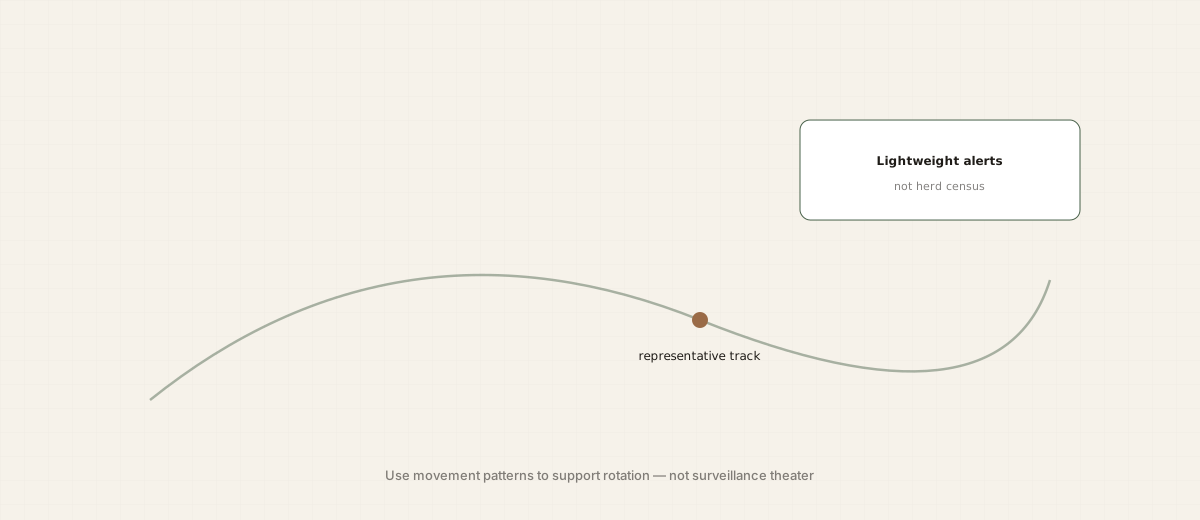
If the tracked animal enters that area, the system can trigger a notification.
That notification does not have to be complicated. It could simply be:
- an SMS
- a mobile alert
- a daily summary
- a note to a local coordinator
- a flag in a simple dashboard
The real value is not in the alert itself. The value is in reinforcing awareness and timing.
Because one of the biggest challenges in pasture management is not just agreeing on zones. It is remembering and responding consistently over time.
This is not replacing local knowledge
This point matters a lot.
Communities already understand movement, pressure, and seasonal decision-making in ways that no map alone can capture.
So the role of technology here is not to override local knowledge. It is to support it.
A system like this could help by:
- making movement patterns easier to review
- giving recovery zones clearer boundaries
- helping test whether rotational ideas are holding in practice
- supporting better discussion between herders, village leaders, and partners
- creating records that can be compared over time
In other words, the technology does not create the grazing system. It helps strengthen the parts that are difficult to track consistently.
Why this could matter for pasture recovery
Pasture recovery often fails because pressure keeps returning too soon.
That may happen even when people want better outcomes, because the landscape is large and the coordination burden is high.
If movement becomes more visible, and if recovery zones become easier to monitor, then a community may have a better chance of actually protecting key areas long enough for recovery to happen.
Over time, that could support:
- stronger vegetation regrowth
- less repeated pressure on the same patches
- clearer understanding of grazing patterns
- more deliberate seasonal use
- better decisions about where restoration support is needed
And that is where technology starts to connect directly to ecological outcomes.
Not because GPS “restores pasture” by itself. But because it may help communities hold a recovery system together more consistently.
Where alerts could actually help
One of the more practical features in a system like this is messaging.
Imagine a village or herder group has agreed that a certain area should rest for part of the season.
A simple alert system could support that by sending:
- a reminder when tracked movement enters a recovery area
- a summary when a zone has been repeatedly entered
- a seasonal update showing which zones have had the most pressure
- a signal that helps prompt discussion before the pressure gets too high
This is not about punishing people through technology. It is about making the system easier to follow.
In many programs, the difference between a good idea and a durable one is whether people get timely support at the moment decisions are being made.
SMS is especially interesting here because it is:
- lightweight
- familiar
- cheap compared to many digital systems
- useful even when full dashboards are not practical
So the power of the system may be less about advanced analytics and more about simple, timely prompts.
Could incentives also play a role?
Potentially, yes.
This is one of the more interesting future extensions.
If communities want to support recovery zones seriously, there may be room to explore small incentive models, such as:
- rewarding compliance with agreed recovery periods
- supporting herders who help protect recovering areas
- linking seasonal adherence to pilot benefits
- recognizing zones that show better recovery outcomes over time
That would need to be designed very carefully. Incentives can distort behavior if done badly. But there is a real idea here:
if the landscape benefits from recovery, and communities are taking on the effort of managing that recovery, there may be value in supporting that behavior directly
That does not need to be the starting point. But it is a reasonable future direction.
What this could look like as a pilot
A pilot version of this does not need to be large.
In fact, it is probably better if it is not.
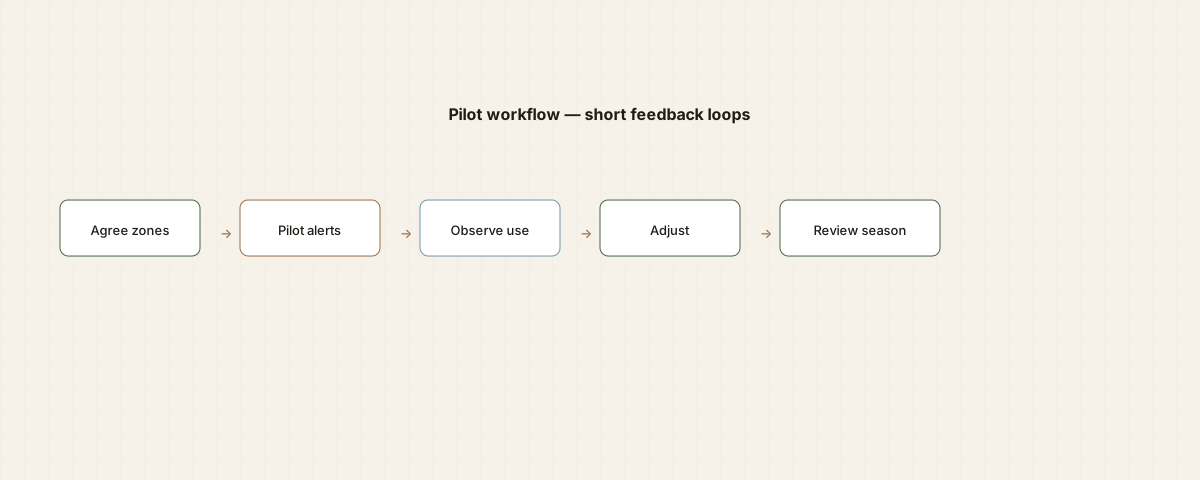
A realistic pilot might involve:
- one village or one grazing group
- a small number of defined grazing and recovery zones
- one or two representative tracked animals per herd or group
- GPS-based movement logging
- geofencing around selected zones
- basic SMS alerts or summaries
- seasonal review of movement and land condition
The goal would not be to build a finished product immediately.
The goal would be to test questions like:
- Can this help communities keep recovery zones intact for longer?
- Does movement data reveal useful pressure patterns?
- Are simple alerts enough to support behavior change?
- Does visibility improve ecological decision-making?
- What part of the model feels genuinely useful, and what part feels like extra complexity?
Those are the kinds of questions worth piloting.
What this does not solve on its own
It is important to say this clearly.
GPS, geofencing, and alerts do not solve managed grazing on their own.
They do not create:
- trust
- local agreements
- stewardship
- pasture recovery
- water access
- good seasonal planning
Those still depend on people, context, and local practice.
But the technology may make certain parts of the system easier:
- visibility
- timing
- reminders
- pattern recognition
- coordination
- pilot learning
That is enough to make it worth taking seriously.
Why this matters in Somalia
In Somalia, where livestock systems, mobility, and land pressure are all closely connected, this kind of support layer could be especially relevant.
Not because it is high-tech, but because it could help with a very practical issue:
how to support better use of grazing landscapes without requiring a heavy management system
A lightweight model built around:
- representative tracking
- simple mapped zones
- alerts
- seasonal review
- local decision-making
may be more realistic than trying to introduce a fully centralized or highly technical system from the start.
This is especially important if the long-term goal is to combine:
- pasture restoration
- community participation
- practical field intelligence
- and scalable pilot learning
Why this matters for Abuur Labs
At Abuur Labs, we are interested in this kind of pairing because it connects a real ecological problem to a realistic technical support model.
The problem is not abstract. Pasture needs recovery time. Pressure needs to be understood. Zones need to hold long enough to matter.
And the technology does not need to be overly complex to be useful.
That combination is exactly the kind of thing we think is worth exploring:
- ecology first
- simple technology second
- practical pilots before scale
- learning built into the process
Where this could go next
If a lightweight pilot like this proved useful, there are several directions it could grow into over time:
- seasonal grazing dashboards for village leaders or partner organizations
- simple recovery scoring for different zones
- alerts tied to changing seasonal rules
- better integration with pasture monitoring and mapping
- small incentive systems for compliance with recovery agreements
- broader village-level visibility into land pressure patterns
The important thing is not to start with all of that.
The important thing is to start with the real problem and ask: what is the lightest useful support system we can build around it?
That is usually where good field technology begins.
Key takeaway
GPS, geofencing, and simple alerts will not manage grazing on their own — but they could provide a useful support layer that helps communities protect recovery zones, understand movement patterns, and make managed grazing more workable in practice.